

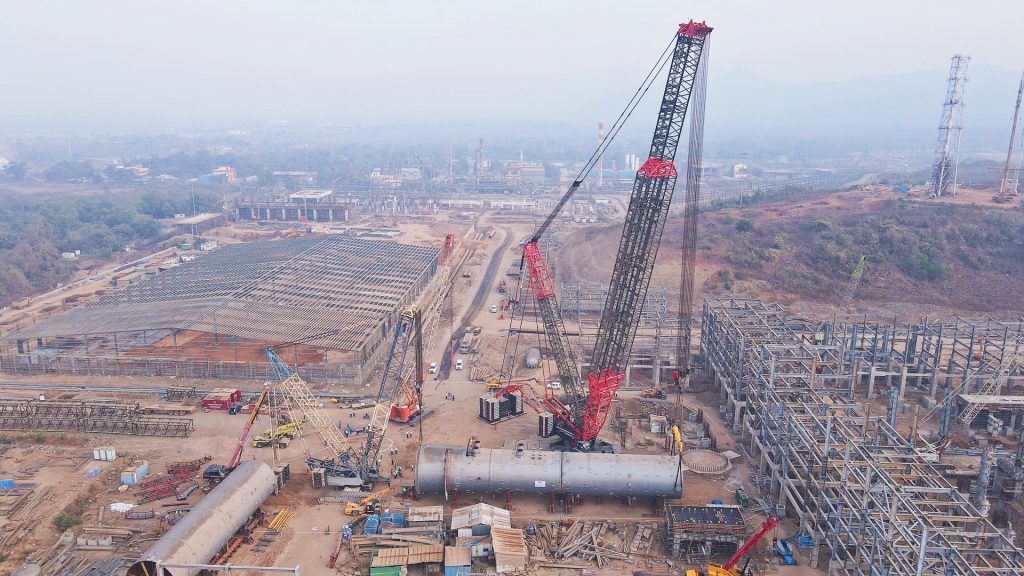
Choosing the Right Crane: Crawler vs. Hydraulic
Choosing the right lifting solution is a high-stakes decision that dictates the efficiency and safety of any construction or engineering venture. The choice between Crawler and Hydraulic cranes typically hinges on three critical variables: project duration, load requirements, and site ground conditions. While crawler cranes offer unmatched stability for massive lifts on soft or uneven terrain, hydraulic cranes are the preferred choice for urban environments where mobility and rapid setup are paramount. Understanding the Fundamentals: Crawler vs. Hydraulic Cranes To make an informed decision, one must first understand the mechanical and structural distinctions between these two industry workhorses. The “Crawler vs. Hydraulic” debate is essentially a comparison between Lattice Boom stability and Telescopic Hydraulic versatility. The Undercarriage: Tracks vs. Wheels The most visible difference lies in the base. Crawler cranes are mounted on a set of tracks (crawlers). This design distributes the machine’s weight over a larger surface area, significantly reducing ground bearing pressure. In contrast, Hydraulic cranes (specifically truck-mounted or all-terrain variants) use rubber tires and rely on outriggers to stabilize the machine during a lift. The Boom: Lattice vs. Telescopic A crawler crane typically utilizes a lattice boom – a lightweight yet incredibly strong steel truss structure. These are assembled section by section. On the other hand, a hydraulic crane uses a telescopic boom made of high-strength steel box sections that extend and retract via internal hydraulic cylinders. Key Takeaways for Project Managers Assess the Soil: If the ground is soft or unpaved, choose a crawler crane for infrastructure projects. Evaluate the Duration: Use hydraulic cranes for short-term “in-and-out” tasks; use crawlers for long-term heavy lifting. Consider the Radius: Lattice booms maintain higher capacities at longer radiuses compared to telescopic booms. Check Road Access: If the site is in a remote area with narrow roads, the transport of a large crawler must be planned months in advance. When to Choose a Crawler Crane: The Powerhouse of Infrastructure For massive infrastructure projects, wind farm installations, and industrial refineries, the crawler crane is often the undisputed choice. Its advantages are rooted in its “pick-and-carry” capability and heavy lifting prowess. 1. Superior Stability and Load Capacity Crawler crane advantages are most evident when lifting ultra-heavy loads (exceeding 600 MT). Because they do not use outriggers, their stability is inherent to their wide track-base and massive counterweights. This makes them the primary choice for heavy lift crane rental needs in the energy sector. 2. Handling Challenging Terrain Infrastructure sites in India often involve unprepared ground, mud, or loose gravel. The tracks of a crawler crane allow it to operate on soft soil where a wheeled crane would likely sink. This eliminated need for extensive site preparation often offsets the higher mobilization costs of a crawler. 3. Pick-and-Carry Versatility Unlike hydraulic truck cranes, which must remain stationary while lifting, a crawler can move short distances with a load suspended. This “pick-and-carry” feature is essential for modular construction and large-scale plant assembly. When to Choose a Hydraulic Crane: The King of Urban Mobility In the context of urban projects or maintenance tasks with tight deadlines, the hydraulic mobile crane benefits are insurmountable. Speed and precision are the defining traits here. 1. Rapid Deployment and Setup The most significant difference between crawler and hydraulic crane operations is the time to “hook.” A hydraulic crane can drive to a site on public roads, deploy outriggers, and be ready to lift within an hour. This makes them ideal for “taxi crane” services or short-term industrial crane rental services. 2. Precision in Tight Spaces Hydraulic crane applications often involve congested city environments or indoor industrial facilities. The telescopic boom allows for precise height adjustments and the ability to work under overhead obstructions where a fixed-length lattice boom would be impractical. 3. Cost-Effectiveness for Short-Term Tasks For projects lasting only a few days, the logistics of transporting a crawler (which requires multiple trailers and an auxiliary crane for assembly) are rarely justifiable. A telescopic hydraulic crane offers a much lower total cost of ownership for rapid-turnaround tasks. Comparative Analysis: Side-by-Side Evaluation Feature Crawler Crane (Lattice) Hydraulic Crane (Telescopic) Primary Advantage Heavy lifting & Stability Mobility & Setup Speed Ground Pressure Very Low (Tracks) High (Requires Outriggers/Mats) Mobility Slow; requires on-site assembly Road-legal; self-propelled Best For Mega-projects, Wind, Refineries Urban build, HVAC, Maintenance Pick-and-Carry Full Capacity Limited or None Setup Time Days Minutes/Hours Logistics and Transport Considerations Selecting a crane is as much a logistical decision as it is an engineering one. At Sanghvi Movers Limited, we emphasize that the “hidden costs” of crane rental often lie in the Logistics & Transport phase. Crawler Transport: Requires dismantling the boom and counterweights. A 600-ton crawler might require 25 to 30 truckloads for a single mobilization. Hydraulic Transport: Smaller hydraulic cranes drive themselves. Larger all-terrain models might only require 2-5 support trucks for counterweights. Fact-Based Optimization: Industry data indicates that for projects shorter than 30 days, the mobilization cost of a crawler crane can consume up to 40% of the total rental budget. Conversely, for projects exceeding six months, the operational efficiency of a crawler typically leads to a 15-20% reduction in total project duration. Expert Tip: The Wind Factor Lattice booms (found on crawlers) have an open-truss design that allows wind to pass through, offering a higher “wind-sail” threshold. In coastal areas or high-altitude wind farm sites, a crawler crane can often continue operating in wind speeds that would force a solid-surface telescopic hydraulic crane to shut down for safety. Frequently Asked Questions (FAQ) Which crane is better for bridge construction? For long-span bridge construction over water or soft banks, a crawler crane is superior due to its stability and reach. For urban flyovers with paved access, a hydraulic mobile crane is more efficient. Can a hydraulic crane move while carrying a load? Most hydraulic cranes must be stationary on outriggers to lift. However, specialized “Rough Terrain” hydraulic cranes have limited pick-and-carry capacity on prepared surfaces. Why is the crawler crane more stable? Stability comes from the wide footprint of